

The Simple Growth System: A Weekly Operating Rhythm for Busy CEOs
If your business feels busy but not effective, your problem might not be effort. It might be rhythm.
Most CEOs don’t lack ideas. They lack a repeatable way to turn ideas into decisions, and decisions into action.
When there’s no operating rhythm, growth becomes reactive:
You chase what’s loudest, not what matters most.
You start initiatives but don’t finish them.
You make decisions without feedback loops.
You rely on memory and motivation.
A weekly operating rhythm is a simple system that keeps the business moving, even when you’re being pulled into the day-to-day.
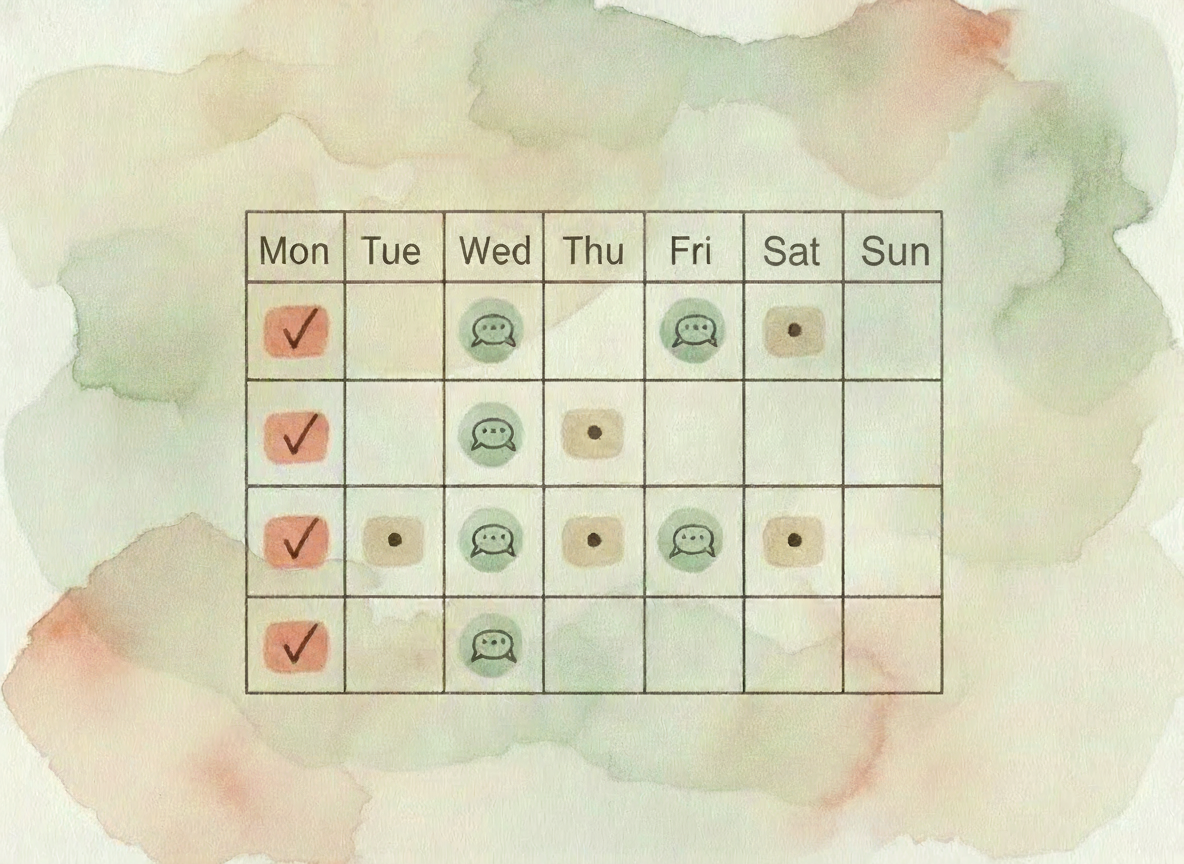
Why growth stalls when your week has no structure
Growth is not one a off project, it’s a set of connected loops learning from each other and responding to whatever the client demands are. Marketing, sales, delivery, operations, finance, and leadership should all be involved for growth to become sustainable. When one loop breaks, the whole system slows down.
Without a weekly rhythm, you don’t notice the break early, you notice it when:
leads drop
cash gets tight
the team is overwhelmed
delivery quality slips
you feel like the constraint
A rhythm gives you early signals, so you can adjust before problems become emergencies and become harder to fix.
What a weekly operating rhythm actually is
A weekly operating rhythm is a short, repeatable set of actions that creates clarity:
What happened last week?
What matters this week?
What is the bottleneck right now?
What will we do about it?
It’s not a long meeting. It’s not a report. It’s a decision habit.
The goal is simple: reduce noise and increase follow-through.
The 60-minute CEO growth block
If you do nothing else, protect one hour per week for growth decisions. Same day, same time.
Here’s a simple structure that works.
1) Review signals (15 minutes)
Pick a small set of signals that reflect the health of the business. For many service businesses, that’s:
leads created
calls booked
proposals sent
deals won
delivery capacity (hours available vs committed)
cash runway (simple view)
You’re not trying to analyze everything. You’re trying to spot drift.
Ask: what changed, and what does it affect?
2) Find the bottleneck (15 minutes)
Now zoom out. Where is the constraint?
Common constraints:
lead flow is inconsistent
follow-up is slow
proposals take too long
delivery is overloaded
you are the approval bottleneck
A systems-thinking question that helps:
If we fixed one thing this week, what would unlock the most flow across the system?
3) Choose one priority (15 minutes)
Most weeks fail because you choose five priorities.
Pick one. Name it clearly. Examples:
“Reduce speed-to-lead to under 2 hours.”
“Ship the new service page and add one CTA to every blog.”
“Create a handoff checklist between marketing and sales.”
This is where growth becomes real. It becomes a decision, not a wish.
If you want help identifying your current bottleneck and choosing the right weekly priority, book a consultation: https://glxpsolutions.com/contact
4) Assign next actions (15 minutes)
Turn the priority into 3–5 actions max. Each action needs:
an owner
a due date
a definition of done
If you’re solo, you’re still assigning. You’re assigning to your calendar.
This step is what turns strategy into execution.
The team version (30 minutes)
If you have a small team, add a short weekly sync but keep it tight.
Agenda:
Wins and numbers (5 minutes)
Bottleneck check (10 minutes)
This week’s priority and actions (10 minutes)
Risks and support needed (5 minutes)
The point is not to talk, the point is to align.
Common mistakes to avoid
A weekly rhythm fails when it becomes either too heavy or too vague.
Avoid these traps:
Too many metrics: you stop looking at them.
No decisions: you “discuss” but don’t choose.
No ownership: actions float and die.
Changing the cadence: consistency is the system.
Your rhythm should feel almost boring. That’s a good sign, boring is reliable.
Start small, then tighten
You don’t need the perfect operating system, you need to have a repeatable one.
Start with:
one hour per week
six signals
one bottleneck
one priority
five actions
Do it for four weeks, review progess, then refine.
If you want a systems-thinking partner to help you build a rhythm that fits your business and your capacity, I can help you design it and keep it simple.
