

What Small Teams Need from Marketing Before They Need More Headcount
When marketing feels chaotic, the first instinct is often: “We need to hire. ”
Sometimes that is true, but in many small businesses, hiring is used to patch a system that is unclear: you add people, and the chaos scales with them.
If you are a CEO or owner trying to grow with a small team, the better question is:
“What does marketing need to work consistently before we add more headcount?”
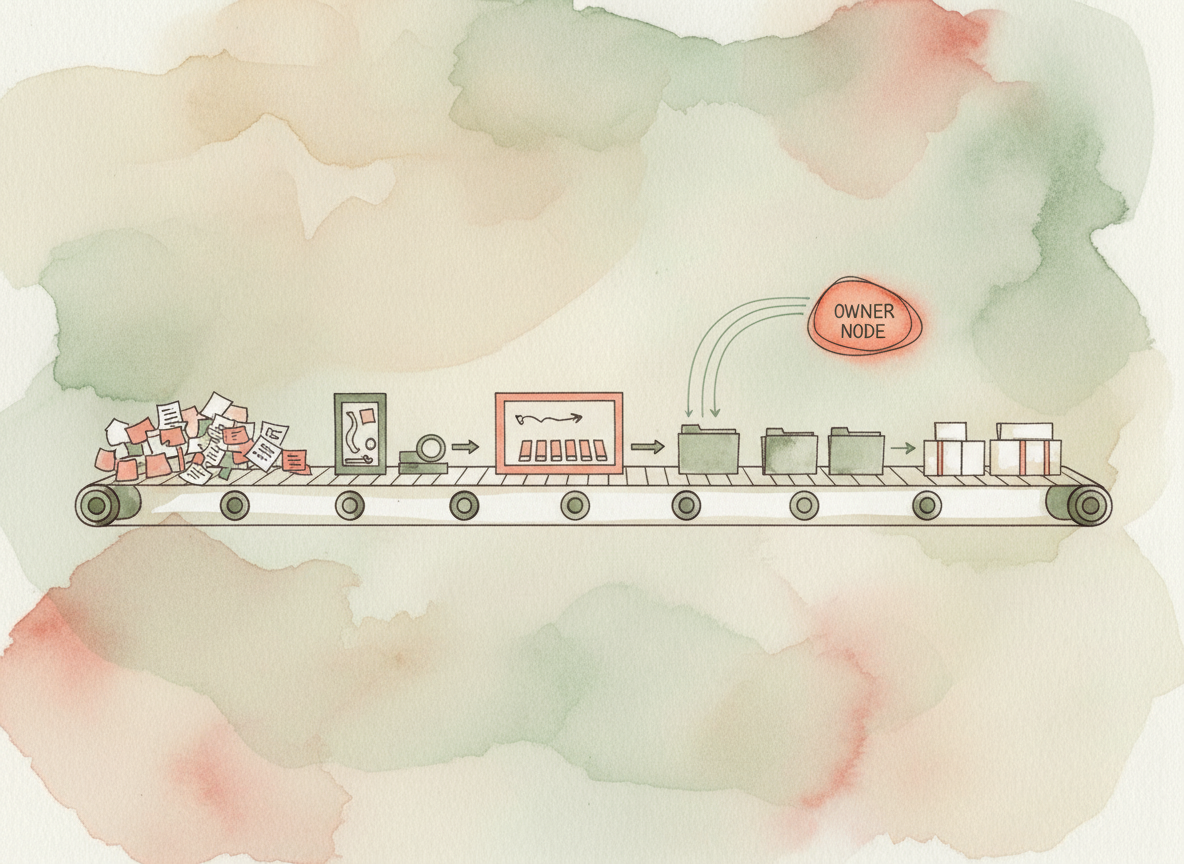
The common trap: hiring to solve a systems problem
Here is what usually happens:
Marketing output is inconsistent.
Sales says leads are not right.
Delivery says promises are unclear.
The CEO ends up rewriting copy, approving everything, and chasing updates.
So the business hires a marketer or an agency.
But without clear direction, that new resource spends their time guessing:
What are we selling, exactly?
Who are we targeting this quarter?
What “good” looks like
What to prioritise when everything feels urgent
The result is predictable: more activity, not more progress.
Why marketing feels heavier as you grow
Marketing gets harder with growth for three reasons:
More handoffs. Marketing touches sales, delivery, and customer success.
More decisions. Channels, budgets, offers, messaging, priorities.
More consequences. Small mistakes become expensive at higher volume.
If the system is informal, marketing becomes a constant debate.
That is why small teams need marketing operations, even if they do not call it that.
The minimum marketing system a small team needs
You do not need a big department but you do need a few clear building blocks.
1) One owner for marketing direction
A small team cannot run marketing by committee.
You need one person who owns direction:
what you are focusing on this quarter
what you are not doing
what “success” means
This is not about doing all the work, it is about making decisions so the work can move.
If the owner is the CEO, that is fine, but it often becomes a bottleneck. This is one reason fractional marketing direction can help.
2) A clear offer and messaging baseline
Before you scale output, stabilise the message.
At minimum, document:
your primary offer (what you do, for who, and the outcome)
3–5 key problems you solve
3 proof points (results, credibility, or examples)
5 phrases your team should use consistently
This becomes the reference point for content, sales conversations, and proposals.
3) A simple lead flow and follow-up handoff
Marketing does not end at “lead captured.”
Define the flow:
where leads come from
how fast they get a response
who owns follow-up
what the next step is (call, demo, assessment)
If follow-up is inconsistent, you will feel like marketing “is not working ” even when demand is there.
4) A weekly content rhythm you can sustain
Consistency beats intensity.
Pick a rhythm your team can maintain for 90 days:
1 weekly insight post
1 short case example or lesson
1 offer reminder
Batch it, reuse it, keep the format stable, a content system should not be a creative constraint. It is a capacity strategy.
5) A campaign intake process (so everything is not urgent)
Small teams lose time because every request feels like an emergency.
Add a simple intake form for internal requests:
goal of the request
audience
deadline
what success looks like
who approves
This reduces last-minute work and protects focus.
6) A lightweight dashboard for decisions
You do not need a complex dashboard, you need decision metrics.
Start with:
lead response time
lead-to-call rate
call-to-proposal rate
proposal-to-close rate
one channel metric (the channel you are focusing on)
If a metric does not change a decision, remove it.
What to stop doing, so you get capacity back
Most small teams do not need more work, they need less noise.
Consider stopping:
posting on too many channels at once
custom one-off campaigns with no repeatable format
constant website tweaks without a clear conversion goal
meetings that exist because ownership is unclear
When you remove noise, the same team produces more.
When headcount is the right move
Hiring makes sense when:
the direction is clear
the system is stable
you have repeatable work that needs more hands
In other words: when you can onboard someone into a process, not into chaos.
How fractional marketing direction fits
Fractional marketing direction is designed for this stage.
It gives you:
a clear quarterly focus
a messaging baseline your team can use
a simple operating rhythm
decision support for budget and channel choices
So your small team can execute with less waste.
If you are considering hiring but suspect the real issue is the system, book a free consultation:
